
 English
 русский
 Français
 Español
 Deutsch
The Short Answer: Which Press Is More Cost-Effective
For most low-volume workshops, a tabletop shop press is the more cost-effective choice. It costs far less to buy, needs no compressor or air lines, uses no energy, and has very few parts that wear out. A pneumatic press only becomes the better value when a shop presses parts all day, needs repeatable cycle times, or has operators who tire from repetitive manual pumping or lever work.
As a practical rule, if your shop performs fewer than 50 pressing jobs per day, such as bearing installs, bushing swaps, pin pressing, light straightening, or small assembly work, a tabletop shop press will almost always deliver a lower total cost of ownership. Above roughly 100 jobs per day, the faster cycle time of a pneumatic press can pay back its higher price within a year.
The rest of this article breaks down purchase price, running costs, maintenance, speed, precision, space, and safety, so you can check the numbers against your own workload.
How Each Press Works and What It Is Built For
Tabletop shop press
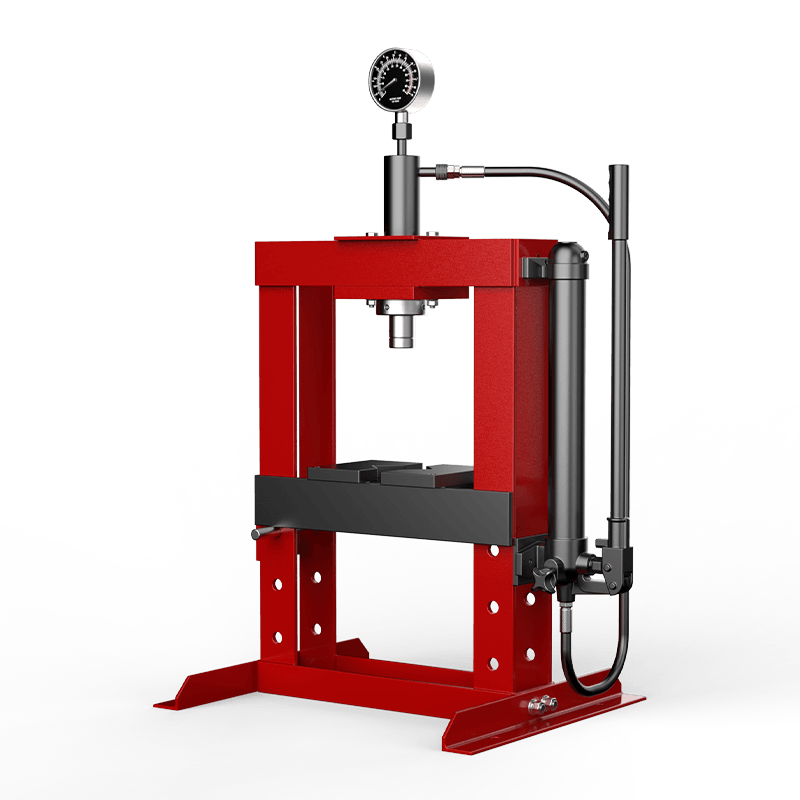
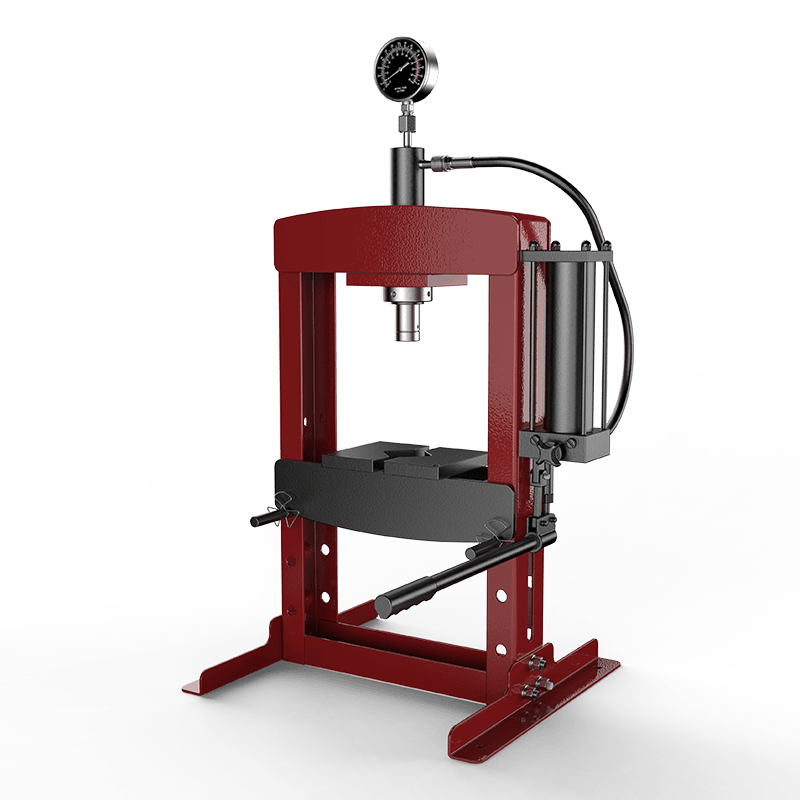
A tabletop shop press is a compact frame, usually rated between 1 and 6 tons, that sits on a workbench. Force comes from a hand-operated mechanism: a screw, a lever, a gear and rack, or a small hydraulic ram with a pump handle. The operator controls pressure by feel or by watching a gauge, if one is fitted. Because the whole machine is mechanical, there is nothing to plug in.
Pneumatic press
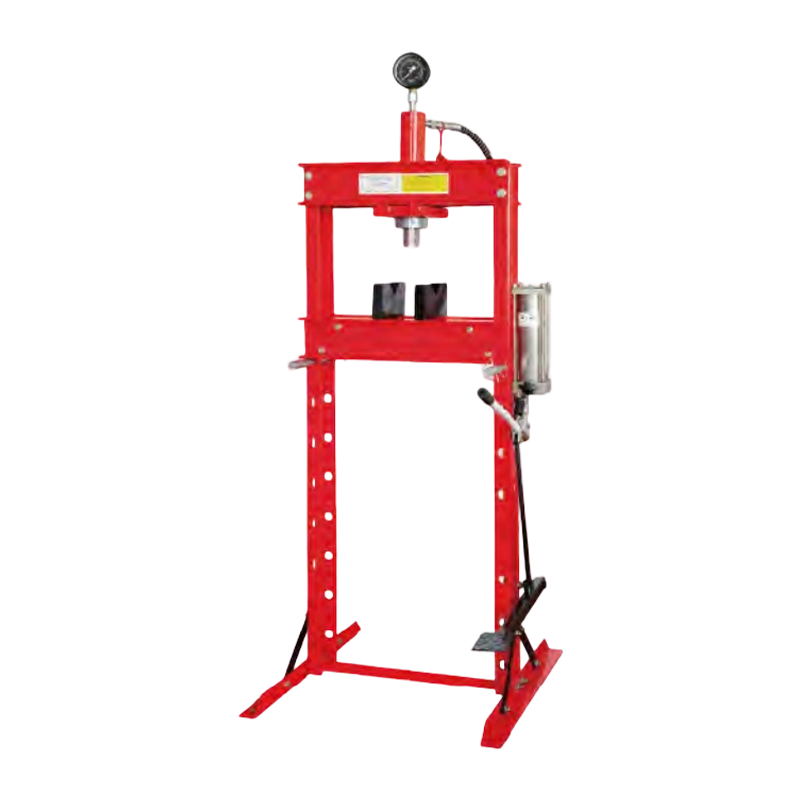
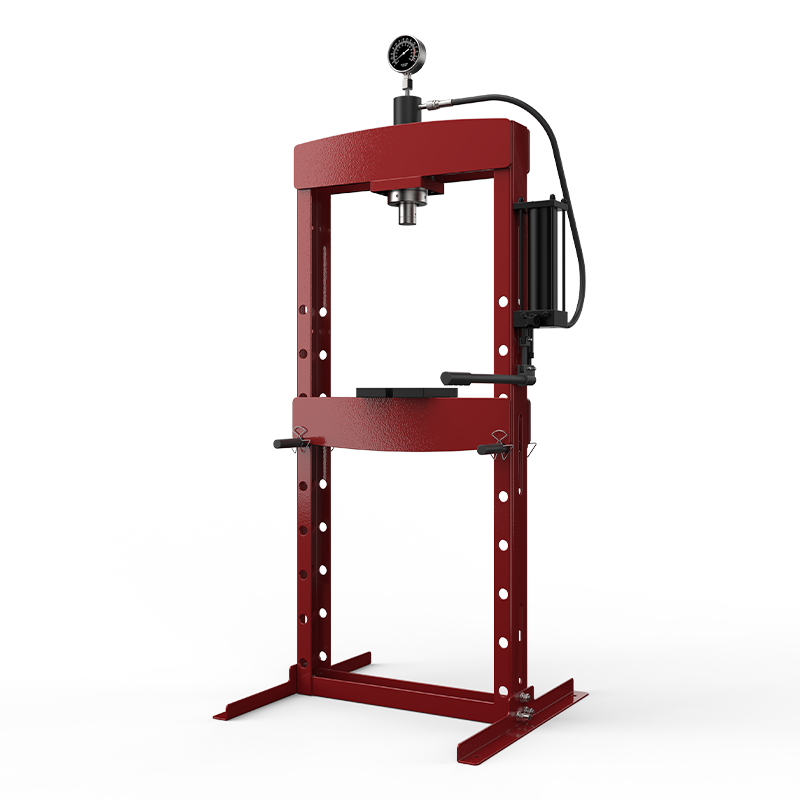
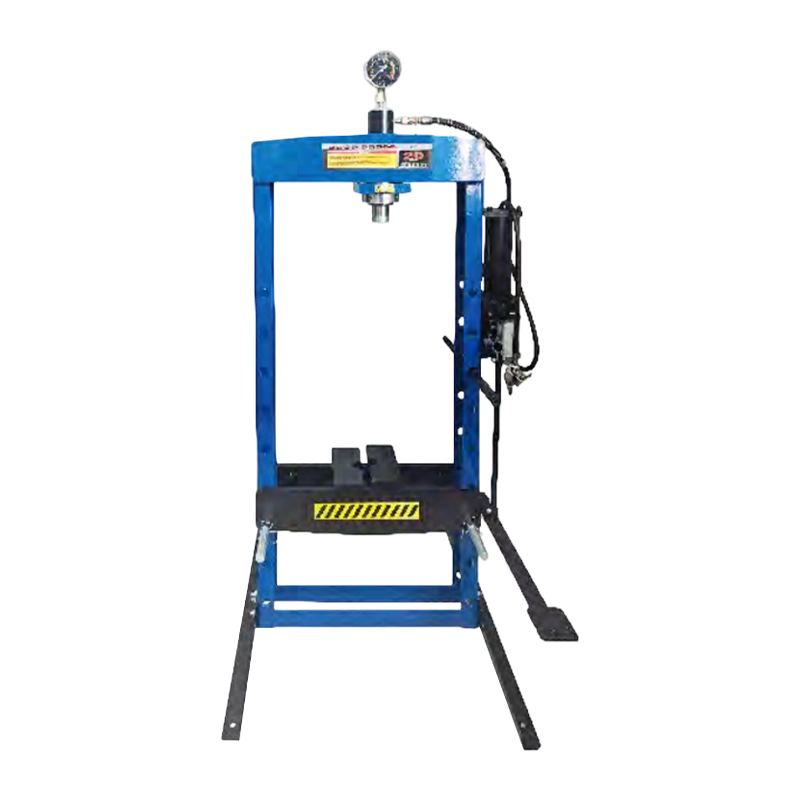
A pneumatic press uses compressed air to drive a ram, either directly or through an air-over-hydraulic booster. Typical shop models range from about 6 to 20 tons and are usually floor-standing. The operator presses a foot pedal or a valve, and the ram extends under air pressure, so cycles are quick and consistent. The tradeoff is that the press depends on a compressor, a regulator, air hoses, and fittings.
The core difference
A tabletop shop press trades speed for simplicity and low cost. A pneumatic press trades simplicity for speed and higher capacity. Which one is the better value depends on how many times per day you actually need that speed.
Upfront Purchase Cost
Purchase price is where the gap is widest. A quality tabletop shop press typically costs $150 to $600, depending on tonnage, frame material, and whether it includes a gauge. A pneumatic press in the 10 to 20 ton range typically costs $500 to $1,500 for the press alone.
The bigger issue is the air supply. If the workshop does not already have a compressor, the real cost of going pneumatic includes:
- A compressor with enough capacity, typically $300 to $900
- A regulator, filter, and moisture trap, typically $40 to $120
- Hoses and quick-connect fittings, typically $30 to $80
- Possible electrical work if the compressor needs a dedicated circuit
Adding these up, a complete pneumatic setup often lands between $900 and $2,500, while a tabletop shop press is ready to use right out of the box. For a small workshop watching its cash, that difference alone can decide the question. Shops that already own a compressor for other tools close part of the gap, but they still pay more for the press itself.
Running Costs and Energy Use
A tabletop shop press has zero energy cost. The only input is operator effort. A pneumatic press consumes compressed air, and producing that air requires electricity.
As an illustration, assume a 2 HP compressor drawing about 1.5 kW, running at a 25 percent duty cycle while the press is in use, with electricity at $0.15 per kWh. That works out to roughly 0.375 kWh per working hour, or about $0.06 per hour. Over a 2,000-hour working year, that is around $110 to $120 in electricity. This is not a large number, but it is a recurring cost that a manual press never has.
The compressor also adds noise, heat, and the need to drain the tank regularly. In a small shop, those are real quality-of-life costs even though they do not appear on an invoice.
Maintenance, Repairs, and Downtime
A tabletop shop press has few wear items. A screw or rack-and-pinion model needs occasional greasing, while a hand-pumped hydraulic version may need a seal replacement every few years if used heavily. Annual upkeep typically runs under $30, and most repairs can be done at the bench with basic tools.
A pneumatic press has more potential failure points. Air cylinders, seals, valves, hoses, and the compressor all age. Moisture in the air lines can corrode internal parts, and a leaking fitting can quietly drive up compressor run time. Budget $50 to $150 per year for filters, seals, compressor oil, and fittings, plus the occasional repair bill.
Downtime matters too. If a compressor fails, the entire pneumatic press stops. A manual tabletop shop press keeps working through power outages and equipment failures elsewhere in the shop.
Speed, Labor, and the Break-Even Point
Speed is the pneumatic press's main advantage. A typical pressing cycle takes about 3 to 5 seconds on a pneumatic press, compared with about 10 to 20 seconds on a manual tabletop shop press once you include positioning, pumping or cranking, and releasing. That is a saving of roughly 8 seconds per job.
Here is a simple illustrative calculation using these assumptions:
- Extra investment for a pneumatic setup: $800
- Labor cost: $30 per hour
- Time saved per pressing job: 8 seconds, worth about $0.067
- Working days per year: 250
The $800 extra cost is recovered after about 12,000 pressing jobs. At 20 jobs per day (5,000 per year), payback takes about 2.4 years. At 100 jobs per day (25,000 per year), payback takes about 6 months. This is why low-volume shops usually do better with a tabletop shop press, and high-volume lines benefit from pneumatic automation.
Keep in mind that these figures ignore maintenance and energy, which push the real break-even point further out for the pneumatic press.
Force, Precision, and Control
Cost-effectiveness is not only about price. A press must also do the job correctly, and here the two machines differ in useful ways.
Where a tabletop shop press excels
A manual press gives the operator direct tactile feedback. When pressing a bearing into a housing or a bushing into a bore, you can feel the part seating and stop immediately if resistance changes unexpectedly. This reduces the risk of cracked housings and damaged races, which is a hidden cost of any pressing job. For delicate work, light straightening, or small precision parts, a tabletop shop press often gives better control than a pneumatic ram that applies force at a set pressure.
Where a pneumatic press excels
A pneumatic press delivers consistent force on every cycle, which matters for repeatable assembly. It also reaches higher tonnage. If you regularly press large wheel bearings, heavy bushings, or oversized shafts that need more than 6 tons, a tabletop shop press simply cannot do the work safely, and the pneumatic press wins by necessity.
Capacity check
Before buying either machine, list the heaviest job you expect to do. As a guide, small bearings, pins, bushings, and sheet-metal bending usually need 1 to 5 tons, which a tabletop shop press can handle. Anything that regularly requires over 6 tons points toward a larger hydraulic or pneumatic frame.
Space, Setup, and Portability
Space is expensive in a small workshop. A tabletop shop press needs only a sturdy bench and about 2 square feet of surface. It can be moved, stored on a shelf, or taken to another job site. It also needs no installation beyond bolting it down.
A floor-standing pneumatic press typically occupies 4 to 8 square feet of floor space, and the compressor needs its own spot, ideally in a ventilated area away from the work zone because of noise. Hoses add trip hazards, and the setup is far less portable. In a garage, hobby workshop, or small repair bay, those constraints can outweigh the benefits of faster cycles.
Safety Considerations
Both types of press can be dangerous when misused, so safety practices should be part of the cost calculation. A press accident can mean injury, damaged parts, and lost time.
- Always wear eye protection, since parts can fracture or eject under load.
- Never exceed the rated tonnage, and remember that off-center loads reduce safe capacity.
- Use proper supports, plates, and guards, and keep hands clear of the pinch zone.
- On a pneumatic press, never place hands under the ram when air pressure is connected.
The slower, deliberate motion of a tabletop shop press gives the operator more time to react. A pneumatic ram moves quickly and with full force the moment the pedal or valve is activated, so it demands more discipline, particularly from inexperienced users.
Side-by-Side Cost Comparison
The table below summarizes the typical differences for a low-volume workshop. Figures are approximate and vary by supplier and region.
| Factor | Tabletop shop press | Pneumatic press |
|---|---|---|
| Press price | $150 to $600 | $500 to $1,500 |
| Total setup cost | $150 to $600 | $900 to $2,500 with air supply |
| Typical capacity | 1 to 6 tons | 6 to 20 tons |
| Cycle time | 10 to 20 seconds | 3 to 5 seconds |
| Energy cost per year | None | About $110 to $120 |
| Annual maintenance | Under $30 | $50 to $150 |
| Floor or bench space | About 2 sq ft of bench | 4 to 8 sq ft plus compressor |
| Best fit | Under 50 jobs per day | Over 100 jobs per day |
When a Pneumatic Press Is Still the Better Buy
A tabletop shop press is not the right answer for every shop. Consider a pneumatic press if any of the following applies:
- You press more than 100 parts per day on a regular basis.
- Your typical job needs more than 6 tons of force.
- You need identical force on every cycle for quality control.
- Operators suffer from fatigue or strain after repetitive manual pressing.
- You already own a compressor and air lines for other tools, which removes much of the setup cost.
If your situation matches only one of these points, weigh it against the extra cost. If it matches several, the pneumatic press is likely worth the investment.
A Practical Buying Checklist
Use these steps to make the decision with real numbers instead of assumptions:
- Count your average pressing jobs per day over a typical month.
- Identify the heaviest job you expect and confirm the tonnage you actually need.
- Check whether you already have a compressor, regulator, and air lines.
- Measure the bench or floor space you can dedicate to the press.
- Estimate the labor saved per job and compare it with the extra purchase cost.
- Choose a tabletop shop press with a sturdy frame, a gauge if you want force feedback, and a rating comfortably above your heaviest job.
If you are unsure, starting with a tabletop shop press is the lower-risk path. It costs little, holds its resale value well, and remains useful as a secondary press even if you later add a pneumatic machine for heavy or high-volume work.
Final Verdict
For a low-volume workshop, a tabletop shop press is the more cost-effective option. It combines a low purchase price, no energy bills, minimal maintenance, a small footprint, and good control for the light-to-medium pressing jobs that most small shops handle. A pneumatic press earns its higher cost only when daily volume, tonnage requirements, or repeatability demands push past what a manual press can reasonably deliver.
Run the break-even numbers with your own labor rate and job count. If payback takes longer than two to three years, a tabletop shop press is almost certainly the smarter purchase.